
For CISOs and IT departments releasing under regulatory and business pressure
Pentesting: Black-Box, Gray-Box, White-Box, SAST, and DAST
We design, execute, or industrialize your offensive security practice, with coverage from code to production. Proven in banking and retail.
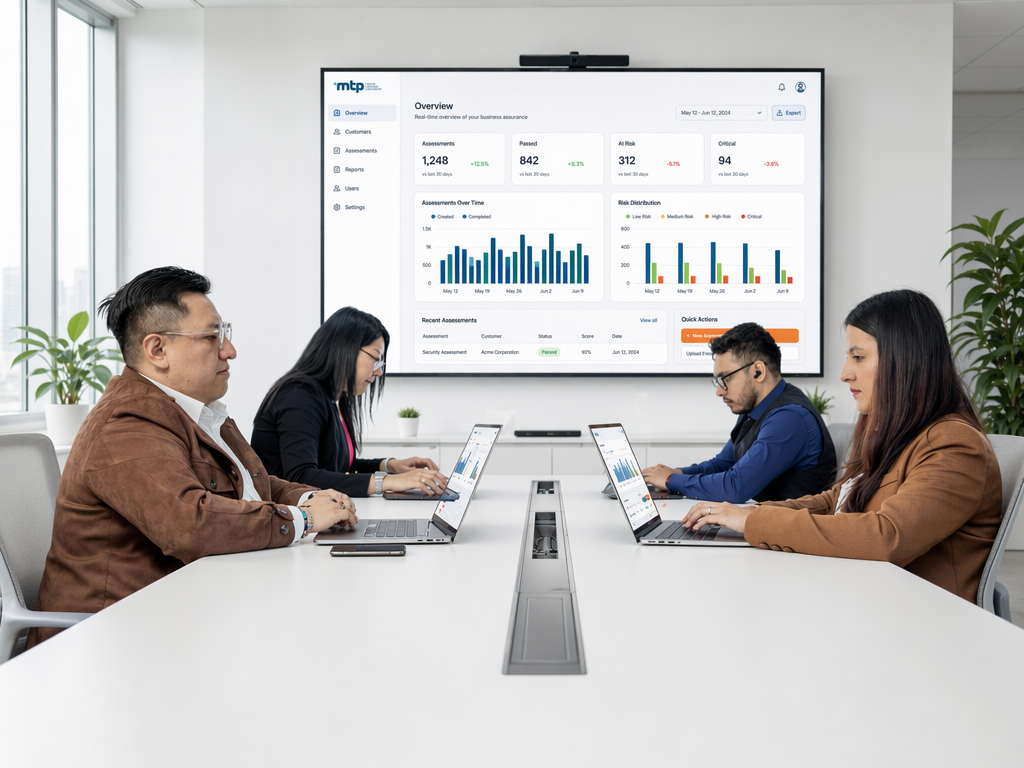
Trusted by banking and retail organizations that achieve zero critical findings in production































The problem isn’t security, it’s what’s missing behind it
Patterns that concentrate real risk
Late Security in Pre-Production
Security is introduced when code is already in pre-production. Findings arrive late, halt releases, and development teams perceive them as blockers, not value. Each rejection erodes the relationship between security and delivery.
Annual Pentest, Unknown Posture Between Exercises
An annual pentest or audit requirement exists. Between exercises, the posture is unknown. Vulnerabilities introduced in quarterly releases remain invisible, and security debt grows without metrics.
SAST and DAST Without Prioritization
SAST and DAST are in the pipeline, but they generate thousands of unprioritized findings. AI operates in silos, adding noise without reducing risk. Teams receive lists without exploitability context.
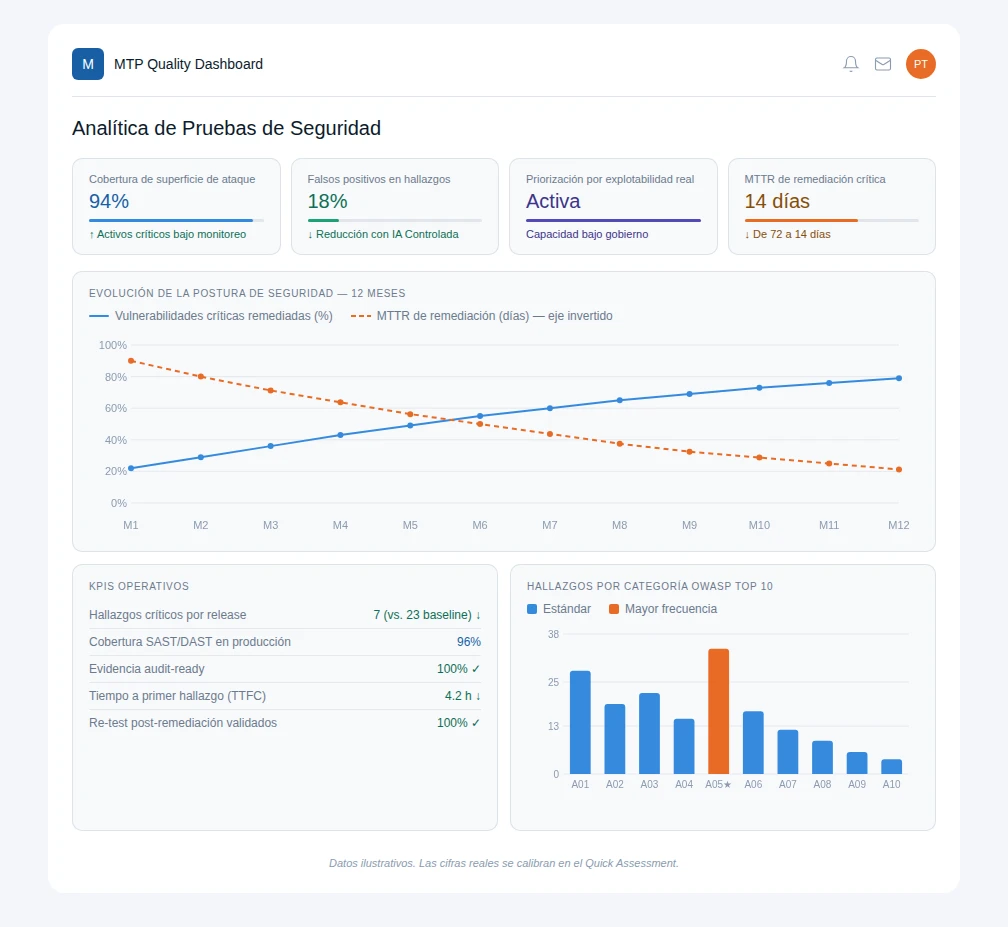
Whatever your scenario, the root cause is the same: offensive security is not designed with the strategy, prioritization, and evidence that the business needs. That’s what we solve.
The numbers that support the urgency
Average global cost of a data breach in 2025
– IBM Cost of a Data Breach Report, 2025
| 20% |
of breaches in 2025 started |
| $1.9M USD |
Average savings per breach |
| ISO 27001 |
MTP certified as an organization |
Where does the real cost appear in your organization?
Observations and fines from CNBV, Condusef, and PCI Council due to lack of active testing evidence and documented remediation
Breaches with identification times exceeding 200 days that incur the highest financial cost
Hotfixes and unplanned maintenance windows to patch what should have been detected before merging to production
Development teams blocked by late reviews with thousands of unprioritized findings
Security debt growing release after release without visible metrics for Management
Lagging behind organizations that already prioritize findings with AI governance
MTP Framework, Offensive Security with Measurable Results
Offensive security with measurable results
Four reasons that distinguish how we operate, with whom we operate, and what we deliver at the close of each exercise.

Full Coverage from the First Exercise
Results, Not Billed Hours
3-Level AI Model
Regulated Environments. ISO 27001 Certified.
What changes with pentesting and methodology
From Spot Pentest to Continuous Validation
Continuous Validation, Not Annual Pentest
Continuous validation replaces annual pentesting, with measurable MTTD and comparable metrics release-to-release.
Regulator-Ready Reports
Executive and technical reports ready for OWASP, ISO 27001, PCI-DSS, CNBV, and SOC 2.
MTTR Under Control
Remediation MTTR under control and post-fix validation for each critical finding.
Actionable Prioritization with Controlled AI
Controlled AI correlates CVSS with EPSS, CISA KEV catalog, and asset criticality for actionable prioritization.
Full Coverage from Code to Production
SAST in the pipeline, DAST at runtime, and manual pentesting for what automated tools can’t see — a single security posture, not isolated exercises.
Zero Critical Findings as Standard, Not Exception
Clients achieve zero critical findings in production under an assisted remediation and post-fix validation model, not just a report that no one follows up on.
PENTESTING OPERATIONAL PROCESS
From breaches and risks to reliable applications
Quick Assessment Pentesting
Current exposure, asset criticality, regulatory framework, and DevSecOps maturity. We understand your starting point before defining the scope.
Asset Inventory
APIs (REST, gRPC, GraphQL), privileged access, cloud (AWS, Azure, GCP), and third parties. We define the real perimeter, not the declared one.
Pentesting Modality
Black-box (external validation), gray/white-box (depth), SAST/DAST (pipeline). Aligned with OWASP, NIST CSF, PTES, and MITRE ATT&CK.
Attack Simulation
Controlled environments, production or non-production, without operational disruption. We execute within windows agreed upon with your operations team.
Assisted Remediation
We support the closure of each critical finding. AI correlates CVSS + EPSS + CISA KEV; a specialist validates criticality before delivery.
PTaaS — Pentesting as a Service
Continuous validation: scope adjustment, re-tests, and metrics per release. The security posture ceases to be a snapshot and becomes a measurable metric.
Reliability backed by data
Operating in the most demanding environments
Financial Sector
Security pipeline stabilized with controlled releases to Management
- +30 active offensive security initiatives
- +900K annual executions across SAST, DAST, and pentesting
- +20K hours of specialization in regulated environments
- 100% of environments operated under regulation
“We stabilized our pipeline and now release with greater confidence to Management. Automation is no longer a risk.”
— IT Director, Financial Sector
Private Sector
Controlled release of critical applications without impact on internal clients or suppliers
- Controlled release without impact on internal clients or suppliers
- Audit-ready evidence aligned with PCI-DSS, ISO 27001, and CNBV
- Assisted remediation with post-fix validation for each critical finding
- PTaaS model with metrics per release
We were able to release our applications in a controlled manner without impacting internal clients and suppliers.
— IT Director, Private Sector
Verified operational scale
Operating in the most demanding environments
Issues Detected
Automated Test Cases
Testing Hours
Test Cases Designed
Pentesting Testing FAQ
Our Most Frequently Asked Questions About Security Testing
What is the difference between compliance-oriented and risk-oriented pentesting?
Compliance-oriented pentesting executes the minimum scope of the standard and delivers a report. Risk-oriented pentesting prioritizes by real impact, validates concrete exploitability, and delivers an actionable remediation plan. The first passes the audit; the second reduces the probability of an incident.
How does the 3-level AI model work?
AI First: automated cross-pipeline correlation. Controlled AI (Human-in-the-Loop with audit trail): combines CVSS, EPSS, and CISA KEV with asset criticality; specialist validates with full traceability. No AI / Compliance-Ready: for classified data or air-gapped environments. The level is decided during the Quick Assessment.
Are the reports valid for CNBV, PCI-DSS, and ISO 27001?
Yes. Audit-ready evidence aligned with PCI-DSS, ISO 27001 Annex A, OWASP ASVS, NIST CSF, and CNBV/Condusef guidelines. Executive report for Management and technical report with each vulnerability classified by criticality, exploitability, and impact, with a prioritized remediation plan.
How long does a full pentest take?
A pentest of an application or environment takes between 2 and 4 weeks, including the executive report, technical report, and review session with the team.
Can the service operate on APIs and cloud environments?
Yes. We cover REST, gRPC, GraphQL, and OpenAPI APIs, and cloud configurations in AWS, Azure, and GCP. The methodology follows OWASP API Security Top 10 and MITRE ATT&CK for cloud.
What is the difference between SAST, DAST, and manual pentesting?
SAST analyzes source code without executing it, before the build. DAST tests the running application, simulating external attacks. Manual pentesting — black-box, gray-box, or white-box — adds the judgment of a specialist to find exploitation chains that no automated tool detects on its own. MTP integrates them into a single model, not as isolated exercises.
What is PTaaS and how does it differ from traditional pentesting?
PTaaS (Pentesting as a Service) transforms pentesting from a punctual annual exercise into a continuous service: scope adjustment, periodic re-tests, and comparable metrics release-to-release. The security posture ceases to be a snapshot in time and becomes a metric that Management can track over time.
What happens if the pentest finds an active critical vulnerability in production?
Critical findings are escalated immediately, outside the normal report delivery cycle, with an immediate mitigation recommendation. MTP supports remediation and performs a post-fix validation to confirm that the vulnerability has been closed before considering the finding resolved.
Which of the three scenarios is your organization in?
The security assessment maps your current risk level, with a concrete deliverable to present to management.